Upper Dolpo Trek: Exploring the Mystical Land of Nepal

0 (0 Reviews)
From: $4,800.00
0
(0 review)
Check
Duration

27 Nigjhts 28 Days

Tour Type

Daily Tour

Group Size

Unlimited

Languages

English

About this tour

Journey Through Remote Beauty and Ancient Culture in the Upper Dolpo Trek

At Alpine Outdoor Adventure Pvt. Ltd, we are dedicated to creating unforgettable adventures in the Himalayas. With a deep understanding of the Upper Dolpo Trek and extensive expertise, we professionally organize every aspect of your trip.

With years of experience guiding trekkers through this challenging yet rewarding landscape, we ensure your safety and comfort every step of the way. Let us turn your dream of conquering the Upper Dolpo Trek into reality. Contact us today to start planning your adventure!

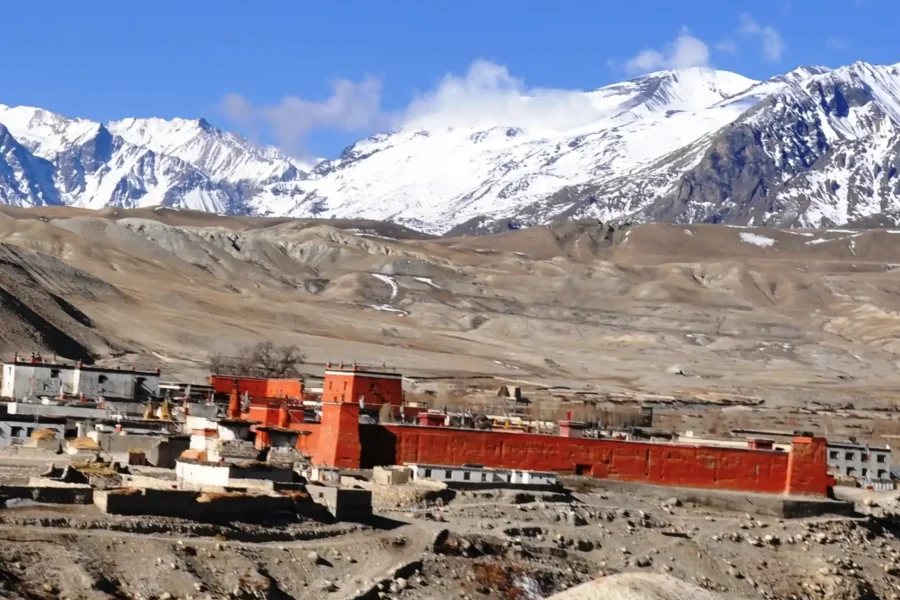
The Upper Dolpo Trek is a dream journey for seasoned trekkers seeking an unparalleled adventure in Nepal’s remote heart. Nestled between the Dhaulagiri massif and the Tibetan plateau, Dolpo offers a glimpse into a world untouched by time. Here, ancient Tibetan Buddhist culture thrives with centuries-old monasteries, Crystal Mountain, and Tibetan influences clinging to dramatic cliff sides and prayer flags fluttering in the crisp mountain air.

Note: This is a standard Itinerary and there is much more opportunity for cutomization based on your time, preferences and skills.

Highlights

  • Remote & Untouched Wilderness: Venture into one of Nepal’s most secluded regions—Upper Dolpo is seldom explored, giving you true solitude and the excitement of genuine discovery
  • Jewel-Toned Phoksundo Lake & Ringmo Village: Crystal-clear turquoise waters sit at 3,600 m, framed by towering cliffs and the snowy peak of Kanjiroba. Ringmo, a traditional Bon-culture village, perches above the lake—an unforgettable cultural and visual jewel
  • Epic High Passes: Cross dramatic passes over 5,000 m—Kang La (~5,350 m), Shey La (~5,115 m), and Ghami La (~5,450 m). From each summit, absorb sweeping vistas of Himalayan giants like Dhaulagiri, Nilgiri, and Kanjiroba
  • Sweeping Alpine Plateaus & Dramatic Contrast: Journey across vast, windswept plateaus and rugged Trans-Himalayan terrain, then descend into lush pine-rhododendron valleys. Every step delivers breathtaking variety and a great sense of adventure.
  • Ancient Highland Villages and their Culture: Explore remote settlements—Dho Tarap, Saldang, Tinje, Chharka—where Tibetan-Buddhist and Bon traditions thrive. Ancient gompas, prayer flags, and mani walls provide deep cultural immersion.
  • Shey Gompa – The “Crystal Monastery”: Perched at around 4,200 m, this 11th-century gem is steeped in sacred history and adorned with intricate murals—set against the backdrop of the majestic Crystal Mountain .
  • Wildlife & Biodiversity Haven: Inside Nepal’s largest national park, see blue sheep, musk deer, Himalayan tahr—and with luck, the elusive snow leopard—amid over 200 bird and mammal species.
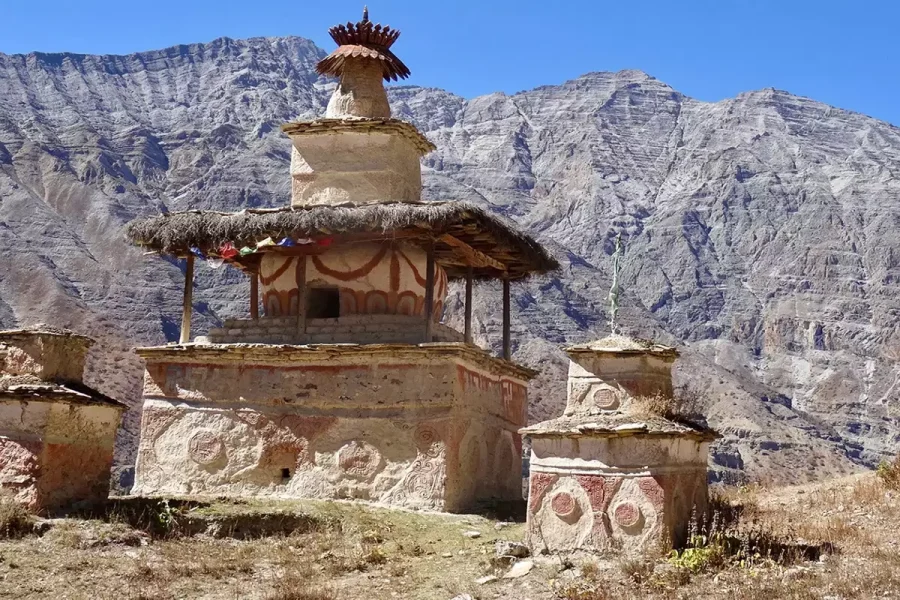
  • Ancient Caravan Traditions: Walk centuries-old trade routes, spotting yak and dzopa caravans. Mani stones and chortens line trails that echo Himalayan history

Included/Excluded

  • Transportation: Include international airport pickup and drop-off services as well as all necessary transportation i.e. by road or air based on the itinerary.
  • Food and Accommodation: This trek is a complete off the grid and camping trek, so the accommodation will be on high quality tents during the trek, 3 meals with tea/ coffee/ juice prepared by professional high altitude cook.. 3 star accommodation in Kathmandu and Nepalgunj with breakfast, and a mountain lodge in Jomsom.
  • First Aid and Safety: Provide basic first aid kit with emergency oxy can. Accidental insurance for the trekking staff. Our guides are trained wilderness first aid responders and we will have our team in Kathmandu 24/7 ready for emergency communication and coordination if needed.
  • Guide, Porters and Cook: Professional trained govt. Registered Trekking guide and strong porters combination of mules, yaks, Dzokpas.
  • Basic Gears: Sleeping bag, down jacket and duffle bag if clients do not have one.
  • Farewell dinner: after the trek we will try and introduce you to our local cuisines ie. cultural immersion.
  • Documentation: All the necessary Permits including the special restricted zone, tickets monasteries, museums, hotspring, taxes and company service fee.
  • Extra Accommodation, Food, Beverages and Activities: Anything ie accommodation, food, beverages and activities that's not mentioned in the cost includes.
  • Personal items: Personal trekking gears, Personal medical, sanitation and care requirements, personal medical including evacuation insurance.
  • International flights: flight tickets to Nepal and from Nepal to home or the next country.
  • Personable expenses: In mountains depending on the place hot showers, electrical charging and internet will cost extra…..as energy and technology up there is rare resources to gather.
  • Bank Transfer fee: while transferring the booking fee it will cost a small fee depending on the bank or the service provider.
  • Tips: in nepal especially trekking staff expects tips after the trip is completed.
  • Visa and Extension Fee: You can get Nepal visa on arrival and the price depends on the no. of days, minimum 15 days cost you 30 USD.

Itinerary

Welcome to Nepal. We will be there at Airport arrival waiting to receive you and help make a smooth  transfer to a hotel. Evening gear check and trip briefing.

Dedicate this day to preparing for the trek, including obtaining necessary permits for Upper Mustang. Explore Kathmandu’s UNESCO World Heritage Sites like the Pashupatinath Temple, Swayambhunath, and Patan Durbar Square. 

Your journey begins with a scenic flight from Kathmandu to Nepalgunj, a bustling city in the Terai region of Nepal. Upon arrival, transfer to your hotel and take some time to relax and explore the local markets. This day is perfect for acclimatizing and preparing for the adventure ahead.

Take an early morning flight from Nepalgunj to Juphal, the starting point of your trek. Upon arrival in Juphal, begin your trek to Dunai, the administrative center of Dolpo. The trail offers stunning views of the Himalayan peaks and passes through terraced fields and traditional villages.

Start your trek from Dunai to Chhepka. The trail follows the Thuli Bheri River, passing through beautiful landscapes, dense forests, and charming villages. Enjoy the tranquil environment and the natural beauty of the region.

Continue your trek from Chhepka to Chunuwar. The trail offers a mix of uphill and downhill paths, crossing several small streams and suspension bridges. As you approach Chunuwar, the landscape becomes more rugged and scenic.

Trek from Chunuwar to the stunning Phoksundo Lake. The trail ascends gradually, providing breathtaking views of the surrounding mountains and the turquoise waters of Phoksundo Lake. This lake is one of the highlights of the trek, offering a serene and picturesque setting.

Take a well-deserved rest day at Phoksundo Lake. Explore the area, visit the nearby villages and monastery next to Phoksundo Lake, and enjoy the tranquil environment. The best thing to do is hike to the viewpoint of Phoksundo Lake. This day allows you to acclimatize and soak in the beauty of the region.

Start our trek after breakfast to the same trail from day before to view point. Resume your trek from Phoksundo Lake to Sallaghari. The trail leads you through dense forests and along the banks of the Phoksundo River. The lush greenery and the sound of the river make this a refreshing and scenic trek.

Trek from Sallaghari to Nangdala High Camp. The trail ascends gradually, offering stunning views of the surrounding peaks and valleys. As you approach the high camp, the landscape becomes more rugged and dramatic.

Cross the challenging Nangdala Pass at 5,240 meters and descend to Shey Gompa. The pass offers panoramic views of the Dolpo region. Shey Gompa is an ancient monastery and a spiritual haven nestled amidst the mountains

Trek from Shey Gompa to Tata. The trail takes you through beautiful landscapes, crossing several high-altitude passes and offering stunning views of the surrounding mountains.

Continue your trek from Tata to Bhijer. The trail leads you through remote and picturesque valleys, providing an opportunity to experience the unique culture and lifestyle of the Dolpo people.

Trek from Bhijer to Nengla High Camp, crossing the Nengla Pass. The trail offers spectacular views of the surrounding peaks and valleys, making this a challenging but rewarding day.

Once you cross the high pass of Nanga la 5401 m, the trail descends and takes you through beautiful alpine meadows and pastures, offering a serene and picturesque setting.

Trek from Nishal to Saldang, one of the largest villages in the Dolpo region. The trail offers stunning views of the surrounding landscape and an opportunity to interact with the local community.

Continue your trek from Saldang to Khoma Village. The trail takes you through picturesque landscapes, offering stunning views of the mountains and valleys.

Trek from Khoma Village to Shimen. The trail leads you through beautiful valleys and pastures, providing an opportunity to experience the unique culture and lifestyle of the Dolpo people.

Continue your trek from Shimen to Tinje. The trail takes you through picturesque landscapes, offering stunning views of the surrounding mountains and valleys.

Trek from Tinje to Yak Kharka. The trail takes you through beautiful alpine meadows and pastures, offering a serene and picturesque setting.

Trek from Yak Kharka to Chharka, crossing the Mola Pass. The trail offers spectacular views of the surrounding peaks and valleys, making this a challenging but rewarding day.

Trek from Chharka to Norbulung, also known as Nulungsumda. The trail offers breathtaking views of the surrounding mountains and valleys, providing an opportunity to experience the unique beauty of the Dolpo region.

Trek from Norbulung to Ghalden Ghuldum, crossing the Niwala Pass at 5,120 meters and the Jungbenla Pass at 5,550 meters. The trail offers spectacular views of the surrounding peaks and valleys, making this a challenging but rewarding day.

Continue your trek from Ghalden Ghuldum to Sangta. The trail takes you through beautiful landscapes, offering stunning views of the mountains and valleys.

Trek from Sangta to Phalyak. The trail offers picturesque landscapes and the opportunity to experience the unique culture of the local communities

Descend to Jomsom, where you can rest and reflect on your journey through the Dolpo region. Jomsom is a bustling town with a beautiful setting and lies in Lower Mustang

Take a short flight from Jomsom to Pokhara and then another flight from Pokhara to Kathmandu. Upon arrival in Kathmandu, transfer to your hotel and spend the rest of the day at leisure. Reflect on your incredible journey through the Dolpo region.

Finally, day has come to take all the adventurous memories back home, drop to Airport.

Durations

27 Days

Languages

English

Frequently asked questions

Upper Dolpo is generally a dry, mountainous region located across the Himalayan range, lying in the rain shadow of the Himalayas also known as the trans Hi malayan range.

Being in the rain shadow of the Himalayas, this trek sees very little rainfall—less than 500 mm per year—making trails reliably dry, even during the monsoon

However the temperature really varies based on the wind chill and the season.

Season High Passes (~5,000 m) Lower Villages (2,700–4,200 m)
Spring (Mar–May) –10 °C → +13 °C; some snow early on, clearing by mid‑April 0–15 °C (day), –6 to –2 °C (night)
Monsoon (Jun–Aug) –4 °C → +17 °C; high-altitude dry except mist or occasional showers ‏ 15–25 °C daytime; some rain and leeches downslope ‏
Autumn (Sep–Nov) –3 °C → +14 °C; clear skies, ideal trekking season ‏ 8–20 °C daytime; –8 to –4 °C (nights) ‏
Winter (Dec–Feb) Below –10 °C at night; heavy snow, passes often closed ‏ 0–10 °C daytime; –25 to –20 °C (high-altitude nights) ‏

Expect a wild mix of terrain—from pine and rhododendron forests in the lower valleys, transitioning to barren, rocky ridges and stream crossings, and finally opening into wide, windswept alpine plateaus reminiscent of the Tibetan highlands

This trek includes three major crossings at or above 5,000 m—including Kang La, Shey La, Ghami La, and Saldang La. These passes feature steep slopes, uneven rocky trails, and exposure to high-altitude winds.

The absolute high point is Nanga‑La Pass at approx. 5,404 m (17,600 ft), where breathtaking Himalayan panoramas await.

If you are moderately fit and well-prepared, you'll likely do just fine with proper acclimatization. Nevertheless the altitude is never to be taken lightly and its important to follow your guides expertise and guidance during the trek. you should be able to walk for a longer hours up to 10 hrs.

If you experience discomfort—whether due to altitude, fatigue, or illness—our guide team is trained to assess and respond promptly. Depending on the severity, options may include rest, descending to a lower altitude, or even arranging emergency evacuation if necessary. Your safety is always our top priority. Based on the situation we can provide you optional side trip to a safer ground.

On average, you can expect to trek between 5 to 8 hours per day. This may vary based on the itinerary, terrain, and your pace. The trek is designed with acclimatization in mind, allowing for gradual altitude gain and rest days when needed. However some days especially descending down are long and sometimes can take up 10-11 hrs.

While this trek is suitable for most healthy individuals with moderate fitness, some prior experience with hiking or cardiovascular endurance is highly recommended. Daily walking over varying terrain requires stamina, leg strength, and mental preparedness. Consistent pre-trek training—walking, jogging, or stair climbing—will significantly enhance your experience.

It’s advisable to consult your doctor regarding preventive medication such as Diamox (Acetazolamide). While not mandatory, it can aid acclimatization for some individuals. 

Diamox (acetazolamide) is widely used to help prevent symptoms of altitude sickness during high-altitude trekking. It works by speeding up the body's natural acclimatization process. Health experts, including those in wilderness and mountaineering medicine, recommend its use in certain cases.

When should I consider taking Diamox?

  • If you are ascending rapidly to elevations above 2,500 meters (8,200 ft).
  • If you have experienced altitude sickness before.
  • If you're unable to follow a gradual ascent schedule due to time limitations.

What is the recommended dosage?

  • For prevention: 125 mg twice a day (every 12 hours), starting 1–2 days before the ascent and continuing for 2 days after reaching your highest sleeping altitude.

For treatment of mild symptoms: 250 mg twice a day can be used, but rest or descent is still the primary solution.

Are there side effects?

Some people may experience:

  • Tingling in fingers or toes.
  • Increased urination.
  • Mild nausea or dizziness.
  • Changes in taste, especially with carbonated drinks.

These side effects are usually harmless and go away on their own.

Important Notes:

  • Diamox is not a substitute for proper acclimatization. A slow and steady ascent, rest days, and listening to your body remain the most effective ways to prevent altitude sickness.
  • Consult your doctor before using Diamox, especially if you have sulfa allergies or other medical conditions.
  • Stay well-hydrated, as Diamox can increase fluid loss through urination.

Nevertheless we prioritize natural acclimatization and build rest days into the itinerary accordingly.

A personal medical kit is essential. We recommend including:

  • Altitude sickness tablets (if advised), Anti-diarrheal medication, Painkillers, paracetamol or ibuprofen), Anti allergy, Blister plasters, Rehydration salts.

Any personal prescription medication
Your guide will carry a group first-aid kit for emergencies including emergency oxy cans.

You’ll carry a small daypack (20–30L) with essentials like water, snacks, a jacket, and camera. Your main gear will go into a duffel bag or large backpack (60–80L), carried by our porters. Please limit the porter load to a maximum of 10-12 kg per person.

First we truly believe with our proper guidance you will be able to complete the trip and thats what we call our success. If you choose to end your trek early due to your own personel reason or laziness, on your request our team will arrange your safe return to a lower altitude or back to Kathmandu, depending on your preference and condition. however in this case you will not be eligible for refund or any optional side trip.  Any changes in logistics will be managed with your comfort and safety in mind, though additional costs may apply. 

This trek is a complete off the grid and camping trek, so the accommodation will be on high quality twin sharing tents during the trek. Every morning our staff will bring you warm water infront of your tent so that you can wipe clean yourself. Toiled will be temporary, tented as well and will be shared.

For the food there will be 3 meals with tea/ coffee/ juice, customised and prepared by professional high altitude cook.

3 star accommodation in Kathmandu and  Nepalgunj with breakfast, and a mountain lodge in Jomsom.

Hot shower during the trek is rare therefore our staff will serve you a bowl of warm water for your wipe clean yourself every morning. Neverthess you can take cold shower in the rivers and lake during the trek. at the same time you can do a basic laundry. We highily reccommend you to bring quick dry clothings for this reason.

Since its a totally of the grid trek there wond be any permanent power supply.

all the common power are based on the moveable basic solar pannels.

For charging device you can chrage using solar during the lunch time and in the rest days. Therefore we recommend you to bring power banks.

Mobile network coverage exists in lower sections of the trek, but it becomes limited as you gain elevation. In general Nepal has 2 major telecom companies that provide the network services, which are known as “Namaste” or Nepal telecom a govt company and “Ncell” which is a private company. Nepal telecom generals have broader network coverage especially in the rural area.

Tipping is customary in Nepal and greatly appreciated. While it’s discretionary, a general minimum guideline is:

  • Guide: USD 15 per day.
  • Porter: USD 10 per day.

Tips are typically given at the end of the trek in a group ceremony as a gesture of gratitude. 

As of now, the visa fees are:

  • 15 days – USD 30.
  • 30 days – USD 50.
  • 90 days – USD 125

Fees must be paid in cash (USD) upon arrival at Tribhuvan International Airport or border entry points.

Nepal Visa Cost - Department of Immigration

Yes, you can fill out the online visa application form via the official Nepal Department of Immigration website. After submission, print the confirmation receipt and bring it along with your passport and photo to present upon arrival.Nepal Visa Online Services

The most common and the most convenient way to get a Nepal visa is to get on arrival directly from the airport once you land in Nepal.

The most convenient entry point is Tribhuvan International Airport (TIA) in Kathmandu. Popular international carriers such as Qatar Airways, Turkish Airlines, Emirates, and Singapore Airlines offer connections from major cities worldwide via transit hubs like Doha, Istanbul, and Dubai. 

There are few cities where you can fly directly to Nepal daily. They are Bangkok, Kualalampur, Singapore, Delhi, Doha, Dubai and several other cities have direct flights once or twice to Nepal like Beijing, Chongqing, Chengdu, Hongkong, Osaka, Istanbul etc.

Tour's Location

From: $4,800.00

Owner

Alpine Outdoor Adventure

Member Since 2025

Information Contact

Email

info@alpinetreknepal.com

Phone

+9779841233613

Explore other options