20 Nights 21 Days
Daily Tour
10 people
English, Hindi, Nepali
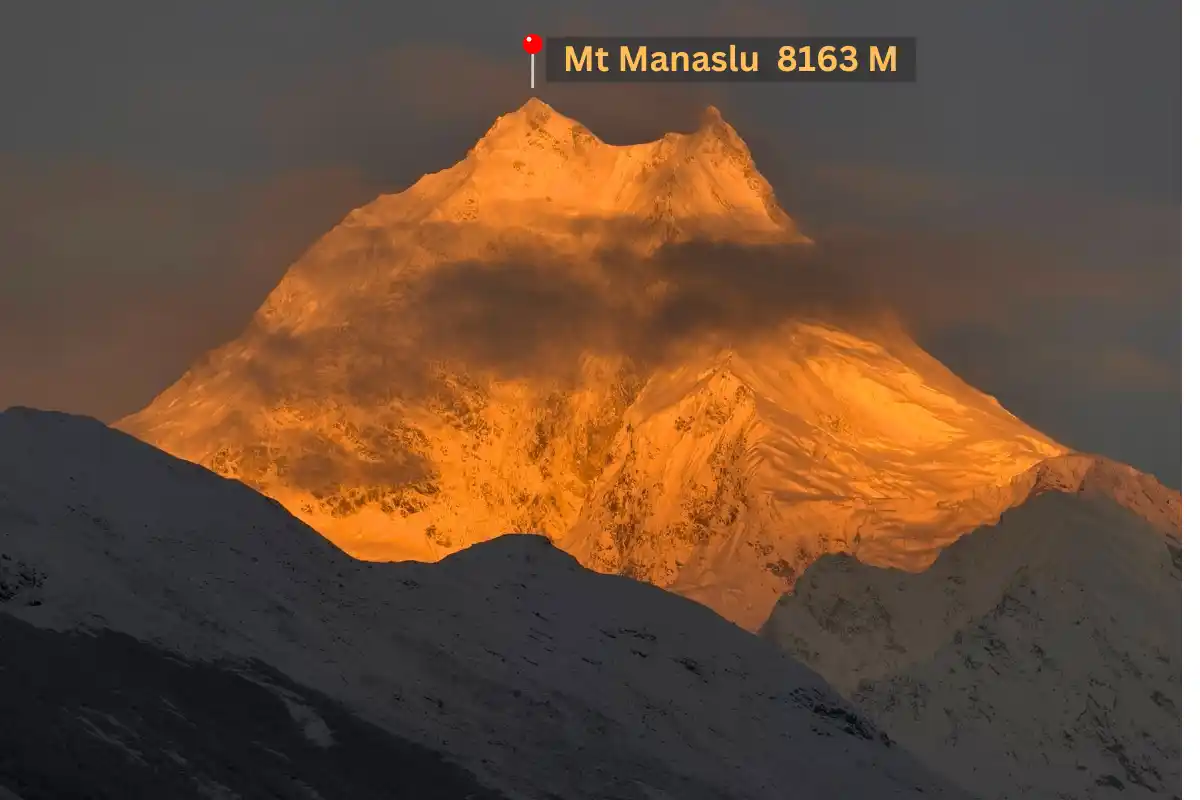
The Manaslu Circuit with Tsum Valley trek is a profound 21-day Himalayan expedition, seamlessly blending the raw, untouched beauty of the Manaslu region with the deep spiritual heritage of the hidden Tsum Valley. Starting from the subtropical foothills at Machha Khola, this challenging yet rewarding journey takes you through ancient Tibetan villages, dense rhododendron forests, and dramatic river gorges, culminating in the formidable Larkya La Pass crossing at 5,160m. Along the way, you will witness the majestic, snow-capped peak of Mt. Manaslu (8,163m), the eighth-highest mountain in the world, towering over pristine alpine landscapes.
Unlike more commercialized routes, this restricted-area adventure offers an exclusive, off-the-beaten-path experience. You will explore centuries-old monasteries like Mu Gompa and Pungyen Gompa, interact with the warm, resilient Tsumba people, and traverse diverse ecosystems that shift from lush green valleys to high-altitude desert. With Alpine Outdoor Adventure, your safety and cultural respect are our blueprint. You will be guided by government-registered, Wilderness First Responder (WFR) certified leaders who manage all Tsum Valley restricted area permits, teahouse logistics, and 24/7 emergency coordination.
This itinerary is meticulously designed for optimal acclimatization, ensuring you have the energy and resilience to conquer the high passes while fully immersing yourself in the rich cultural tapestry of Nepal. Whether you seek profound solitude, authentic cultural encounters, or the ultimate high-altitude challenge, this trek delivers an unforgettable, life-changing Himalayan adventure.
Welcome to Nepal, we will pick you up based on your arrival details from intl airport and transfer to hotel.
Early in the morning, we will come to pick you up at your hotel in a jeep and drive to machha khola. Once we leave behind the busy traffics you can enjoy the scenic views of Nepali landscape.
Trek to jagat, it's an official entry point of the restricted zone, a small village beside the river Budhi Gandaki at the base of the rocky mountain.
Leaving Jagat, the trail ascends through dense woodlands and terraced fields, climbing towards the hidden Tsum Valley. This route is less trodden and offers a sense of solitude amidst the wilderness. Engage with the diverse flora and fauna as you make your way towards Lokpa, the first village after the fork to Tsum Valley. Here, the landscape begins to open up, revealing the steep valley sides and the serenity of the remote region. Lokpa serves as a serene outpost before delving further into the mystic Tsum Valley, offering panoramic views that invite introspection and wonder. Rest in this secluded village and prepare for the ascent into deeper tranquility.
The trek continues with an ascent from Lokpa, heading deeper into the heartland of the Tsum Valley. Traverse through pine and rhododendron forests as the path crisscrosses with streams, offering refreshing moments amidst the climb. Gradual ascents will lead you to the village of Chumling, perched high above the Shiar Khola, providing a vantage point over the valley below. In Chumling, the traditional stone houses and agricultural practices offer a living display of the valley’s culture. Take the evening to explore the ancient monasteries and chortens that adorn the village, immersing yourself in the spiritual heritage of the Tsum people. Tonight, rest under the gaze of the Ganesh Himal, feeling ever closer to the sky.
As dawn breaks over Chumling, your trek progresses towards Chhekampar, traversing the heart of Tsum Valley. The trail undulates through small villages and past ancient, mani walls inscribed with prayers, a testament to the valley’s spiritual essence. With each step, you’ll witness the meticulous terraced fields that speak of the local’s harmonious relationship with the land. As you ascend, the valley widens, and the village of Chhekampar emerges, a settlement steeped in time-honored traditions and flanked by majestic mountains. Chhekampar, also known as Chhekampar, is an ideal spot to engage with the locals and to understand their unique way of life that has remained largely unchanged for centuries. Tonight, you’ll rest in this village that feels like a world preserved from the passage of time.
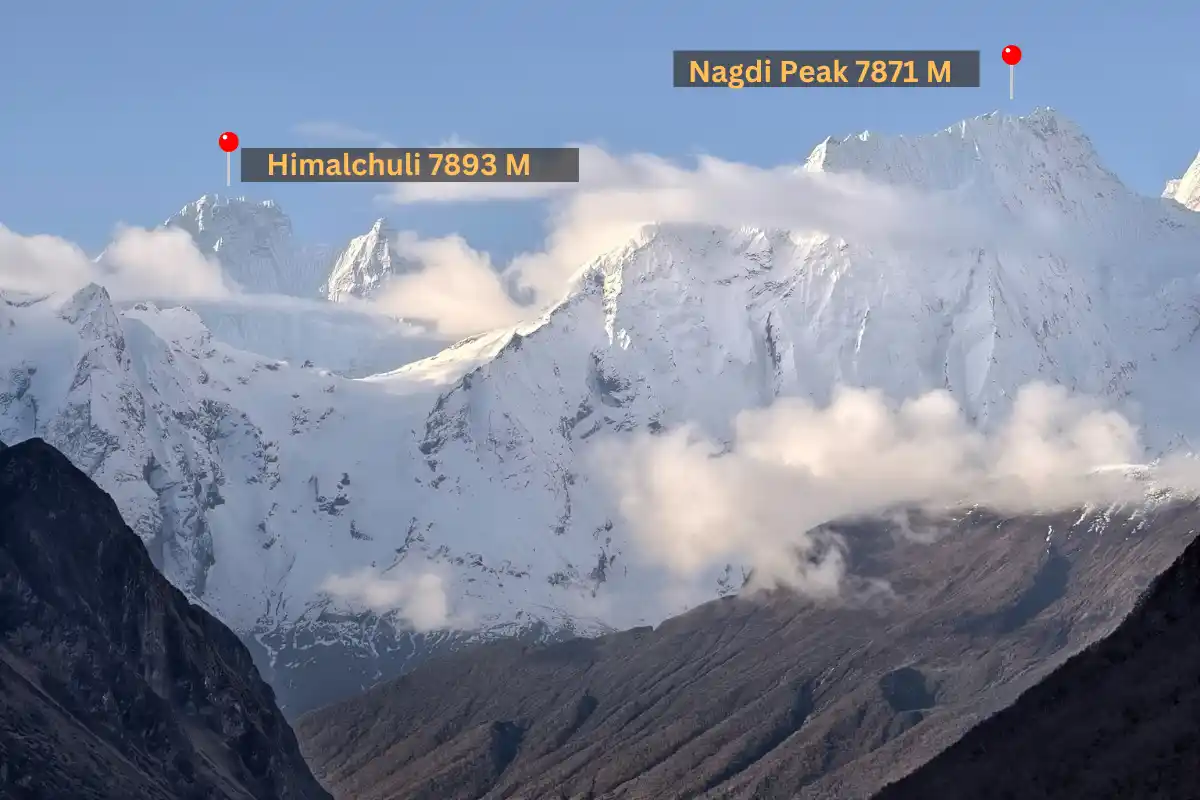
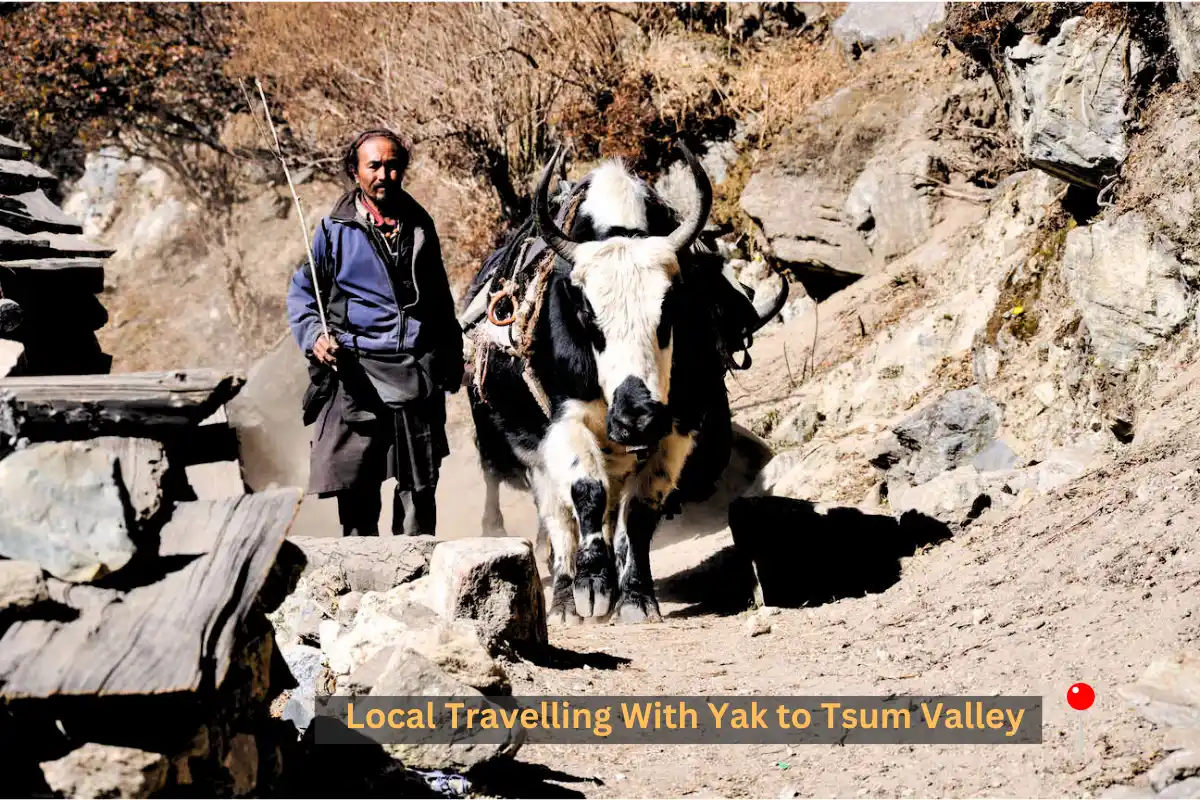
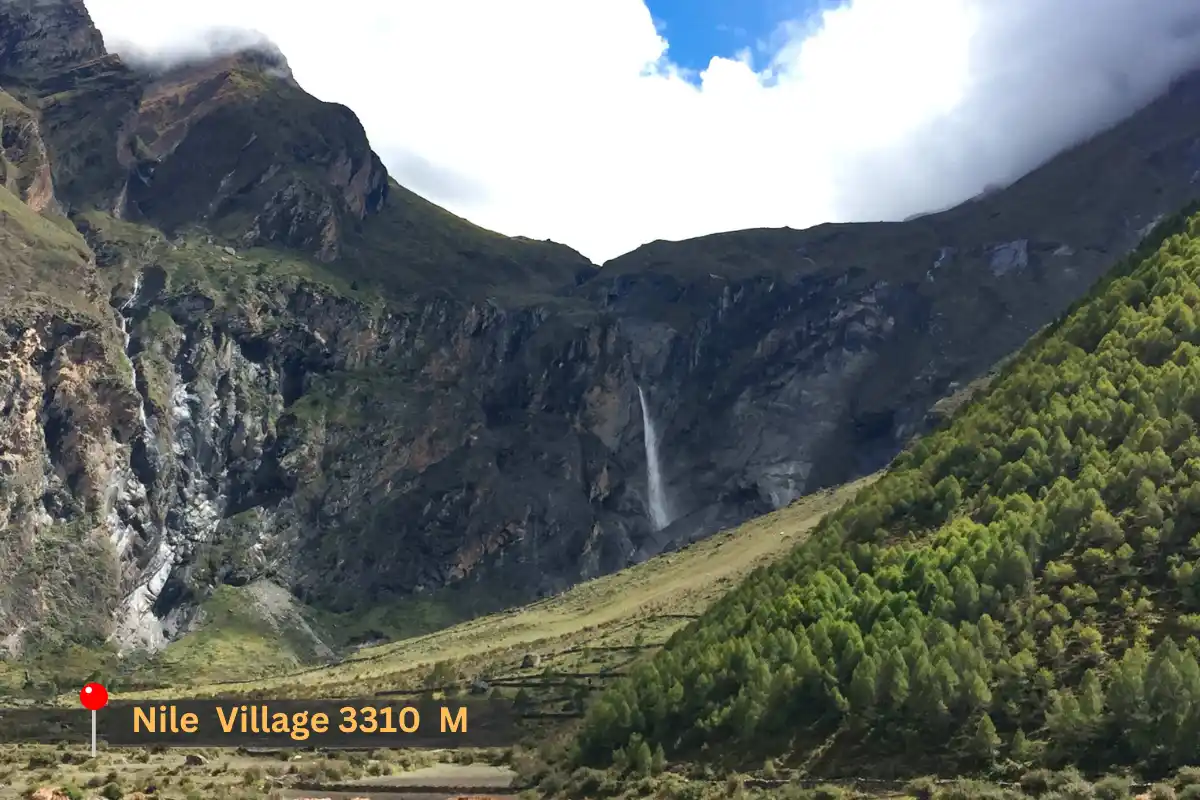
From Chhekampar, the trek ascends further into the upper reaches of Tsum Valley. The walk to Nile is accompanied by the backdrop of the imposing Baudha Himal and Himal Chuli to the west. En route, the path passes through smaller settlements and pastures, with a noticeable change in the landscape as it becomes more arid and alpine. Nile, the last northernmost village in the Tsum Valley, offers a blend of the valley’s natural grandeur and cultural vibrancy, with its stone houses and barley fields shaped by the hands of generations. Here, at the edge of the Tibetan border, you are at the frontier of Nepal’s remote mountain beauty.
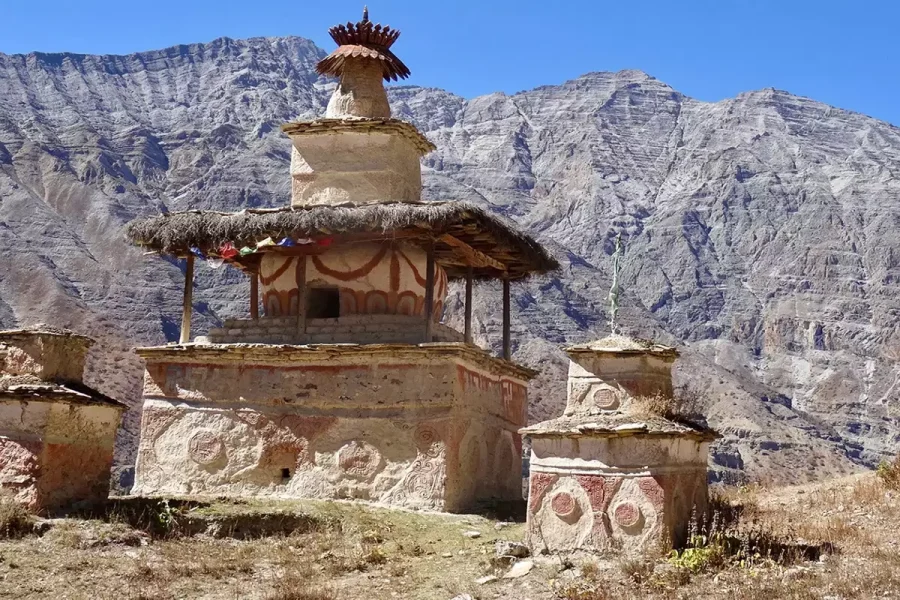
The journey today takes you from Nile to the revered Mu Gompa, an ancient monastery nestled at an altitude of 3,700 meters. This early morning trek is a spiritual ascent, leading you to one of the highest points in the Tsum Valley. After exploring Mu Gompa, known for its religious significance and spectacular views of the valley, you’ll enjoy breakfast amidst the serene mountain landscape. The return trek to Chhekampar retraces your steps, offering a chance to absorb the views and tranquility once more. This day is a blend of spiritual exploration and natural wonder, allowing for a deeper connection with the unique heritage and breathtaking scenery of the Tsum Valley.
Departing Chekamparo, you’ll retrace the trail back towards Lokpa. This descent through the Tsum Valley offers a different perspective on the landscapes you’ve journeyed through. The path meanders past familiar chortens and terraces, each step a reflection on the experiences gathered so far. Arriving in Lokpa, you’ll have the chance to rest and reminisce about the rich cultural and natural tapestry of the Tsum Valley, as you prepare for the next phase of your Himalayan adventure.
Leaving Lokpa, the trail takes you back to the Budhi Gandaki River valley. As you descend, the environment transitions, with the lush greenery of the lower altitudes gradually enveloping the landscape. The trek to Deng is a scenic journey, offering views of the river and surrounding hills. Deng, a small village with traditional houses and a welcoming atmosphere, marks your entry back into the Manaslu trekking route, setting the stage for the next leg of your Himalayan expedition.
Trek to namrung, tibetan styled mountain village with few tea houses, offering a great view of the valley ahead. The trail widens up the valley with lots of farmlands and monasteries.
Trek to Shyala, a plateau style settlement with a great view of manasul and the mountains around. On this day you can also have your first proper view of the Mt. Manaslu.
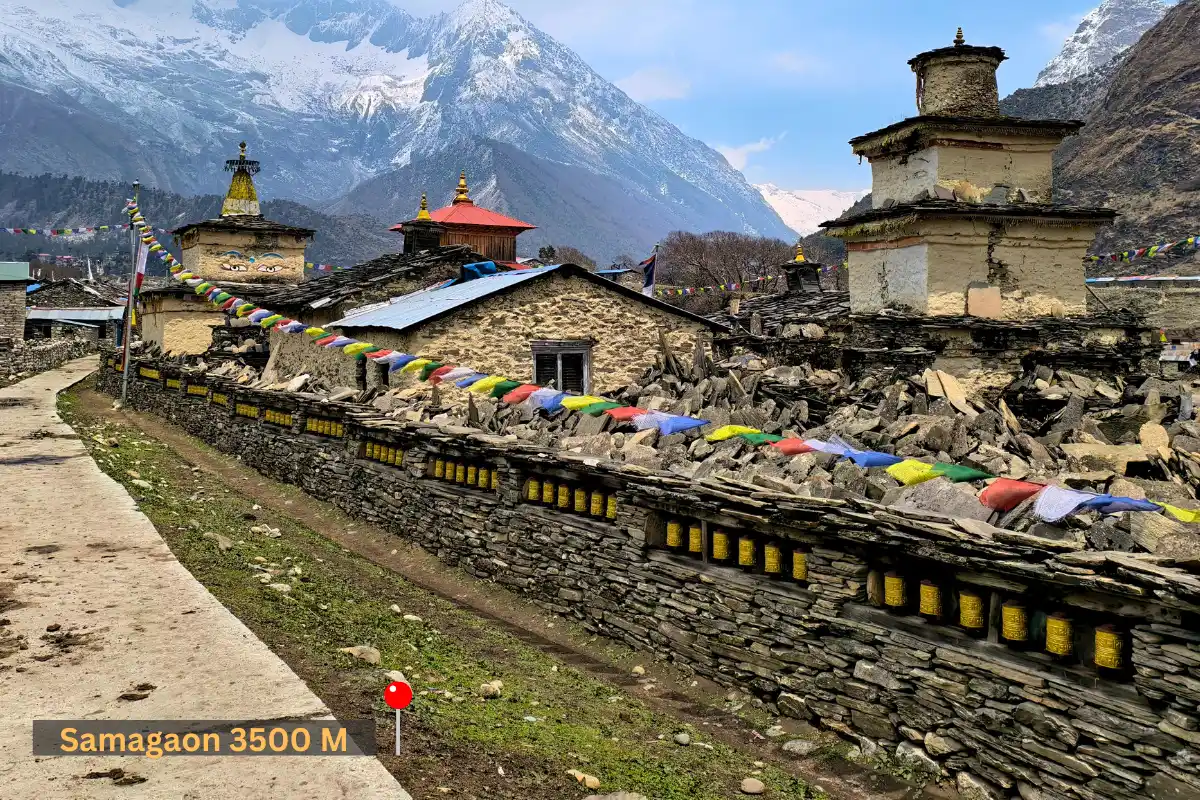
Trek to samagaon via acclimatization side trip to Pungen gompa 4000m, an iconic destination to see the mountain. Samagaon is one of the oldest village in the region and closest to the Manaslu base camp.
Trek to samdo, one of the newest settlements of the whole country and the result of mass migration that took place during the 60's. a village of pure tibetans, who escaped the Chinese cultural revolution in order to live on their own terms - extra acclimatization exploration.
Trek to Dharmasala, the last teahouse of the valley 3 tea houses in total, sometimes get very busy and people might have to sleep in tents...here mostly the accommodation is dormitory- extra acclimatization exploration.
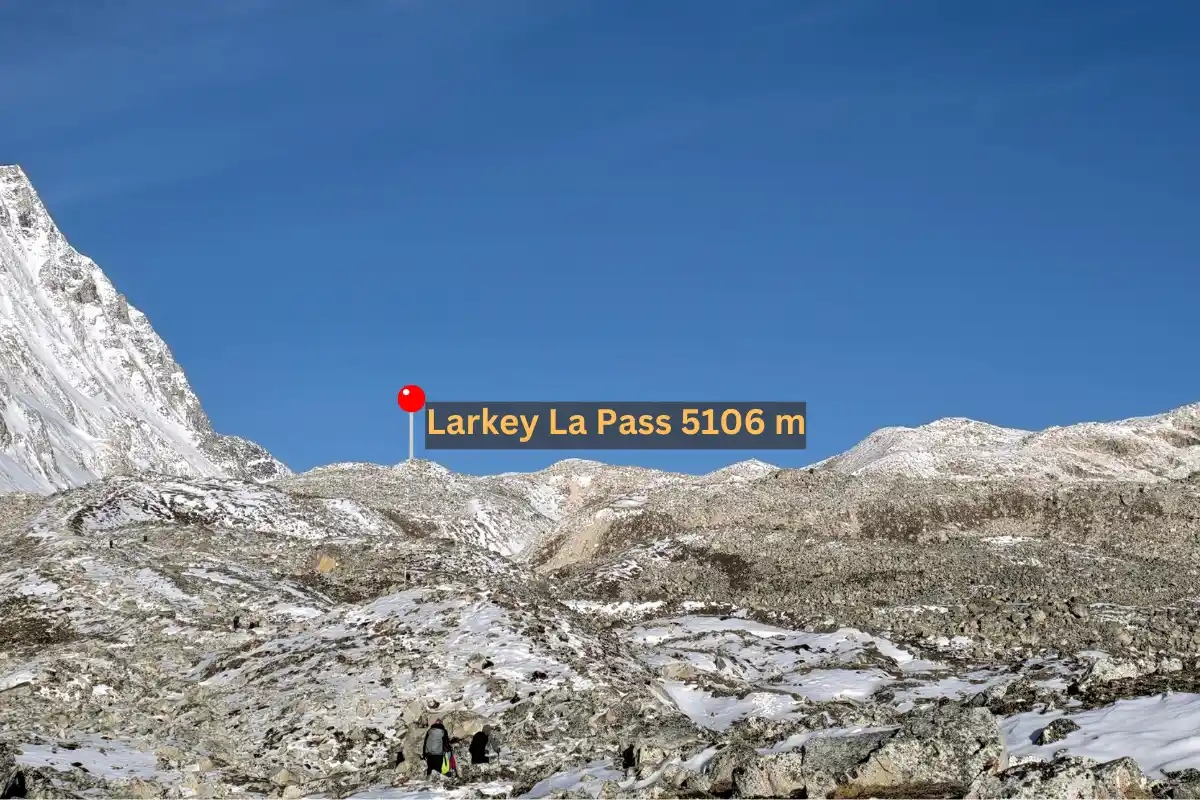
Trek to bhimthang via Larkey Pass 5160 m, people also say it's one of the longest passes in Nepal and is rewarding to reach bhimtang. a tiny valley-like settlement surrounded by real mountains in himalaya.
Trek to Tiliche, back to greenery and forested area...great hiking trails through pine, juniper, rhododendron and many alpine vegetation. You can also witness the breathtaking views of Manaslu North face. the walking trail will be on the dirt road trail after surke.
Trek to dharapani, the last point of the walking, a town that connects the manaslu trail to the famous annapurna circuit. we will get a jeep from here to Besisahar, a vibrant tropical town once famous amongst the trekkers to the annapurna ciorcuit as start point. the roads are an experience itself.
Enjoy the scenic drive to Kathmandu. Bus will stop for toilets and lunch inbetween. once we reach the kathmandu buspark we will take a cab to the hotel. Evenibg time we will have a celeberation dinner.
We will bid you a farewelltoday and drop you to the internation airport according to your requirements. note: the best time is you book your flight for the evening or night departure.
Since the Manaslu and tsum region is a restricted area, you’ll need a special permit from the Department of Immigration, plus permits for Manaslu Conservation Area, Annapurna Conservation Area, TIMS card and a local permit.
The region is close to the Tibetan boarder and is considered polotically sensitive aswell.
The trek is moderate to challenging. You’ll walk up to 11 hours a day at high altitudes (max 5,160m), especially when crossing Larkya La Pass. Good physical fitness is essential, and prior trekking multi day experience at altitude is helpful.
Since the entire trip is long its considered challenging.
Yes, it is generally safe with a professional guide and proper acclimatization. Safety measures include:
Daily monitoring for altitude sickness
Extra acclimatization days built into the itinerary
Agroup first aid kit with oxy can
Helicopter evacuation insurance for Nepali staff
Dormitory/tent options if tea houses are full at high altitude
Travel insurance with emergency evacuation coverage is strongly recommended.
During our trek, you can appreciate bona fide Nepalese nourishment also the more typical international food (Tibetan, Continental, Italian, Indian, and so forth). The essential menu for nourishment includes local food. You might not have more choices for nourishment, yet whatever you eat is healthy. The sustenance menu has dal, Bhat, tarkari, momo (dumplings) and noodles on top.
We will stay at cco Lodges (a small house with few rooms at trekking areas and one room for two people), mostly have a common toilet and bathroom.
Dharamshala may require dormitory or tented accommodation due to limited availability.
This trek is much less crowded comparatively, making it ideal for trekkers seeking a peaceful and exclusive Himalayan experience. The region sees fewer trekkers due to permit requirements and its remote location.
Basic electricity (solar/ community hydro/government) is available in most teahouses, for charging devices it will be available often at an extra cost. Wi-Fi is sporadic and unreliable, especially at higher altitudes.
Mobile network coverage exists in lower sections of the trek, but it becomes limited as you gain elevation. In general Nepal has 2 major telecom companies that provide the network services, which are known as “Namaste” or Nepal telecom a govt company and “Ncell” which is a private company. Nepal telecom generals have broader network coverage especially in the rural area.
During the trek, not all the places have western style toilets in most hotels they have asian style squat toilet, It is always easier and cleaner to maintain squat toilets. Water is stored in drums. Since toilets are common for a floor, it can get dirty in peak seasons, when there’s a high flow of trekkers. Most of toilets you have to throw your toilet papers and sanitary pads in the rubbish bin. There wont be availability of toilet paper to use, however you can purchase them in the tea house, we reccomend you to carry few with you from kathmandu.
There are 2 types of electrical sockets in Nepal –type D which are old UK style (3 round pins) and type C which are standard European style (2 round pins) –and are 220v, same as the UK. The type D socket is commonly found in India, so any adapter that is suitable for India will be the right size, and a European adaptor will be fine for the type C socket.
Through out the trek there will be availability of hot shower, some from gas geaser and some from solar. however it will cost you from around Rs 300 to Rs 700 per shower.
Regarding laundry, there is no proper laundry service, but you can do a self laundry. its important that you are aware about the drying time frame.
It’s advisable to consult your doctor regarding preventive medication such as Diamox (Acetazolamide). While not mandatory, it can aid acclimatization for some individuals.
Diamox (acetazolamide) is widely used to help prevent symptoms of altitude sickness during high-altitude trekking. It works by speeding up the body's natural acclimatization process. Health experts, including those in wilderness and mountaineering medicine, recommend its use in certain cases.
When should I consider taking Diamox?
For treatment of mild symptoms: 250 mg twice a day can be used, but rest or descent is still the primary solution.
Are there side effects?
Some people may experience:
These side effects are usually harmless and go away on their own.
Nevertheless we prioritize natural acclimatization and build rest days into the itinerary accordingly.
A personal medical kit is essential. We recommend including:
Any personal prescription medication
Your guide will carry a group first-aid kit for emergencies including emergency oxy cans.
You’ll carry a small daypack (20–30L) with essentials like water, snacks, a jacket, and camera. Your main gear will go into a duffel bag or large backpack (60–80L), carried by our porters. Please limit the porter load to a maximum of 10-12 kg per person.
If you choose to end your trek early, our team will arrange your safe return to a lower altitude or back to Kathmandu, depending on your preference and condition. Any changes in logistics will be managed with your comfort and safety in mind, though additional costs may apply.
We will do best to complete your adventure succesfully and thats what we will count our success too.
Tipping is customary in Nepal and greatly appreciated. While it’s discretionary, a general minimum guideline is:
Tips are typically given at the end of the trek in a group ceremony as a gesture of gratitude.
Nevertheless tipping is not mandatory if you are not happy, but we would be happy if you let us know your experience as we would like to improve ourselves and our staff. Our operation team in kathmandu will be 24/7 available to hear you and address the situation.
The Larkya La Pass crossing at 5,160m is the most demanding section of the Manaslu Circuit, involving a steep, early-morning ascent over rocky and sometimes snowy terrain. Our Wilderness First Responder (WFR) certified guides assess trail conditions daily, set a deliberate, safe pace, and provide hands-on assistance to ensure the entire group crosses securely. With proper acclimatization, this high-altitude challenge is entirely manageable for well-prepared trekkers.
Mu Gompa sits at an altitude of approximately 3,700m and is the largest and most significant monastery in the Tsum Valley. The side trip from Nile is highly recommended, as it offers a profound glimpse into traditional Tibetan Buddhist practices, stunning valley views, and a peaceful environment for meditation. Our guides will coordinate this acclimatization hike to ensure it aligns with your energy levels and the group's schedule.
Yes, the Manaslu and Tsum Valley regions are government-protected restricted areas, requiring special permits that can only be obtained through a registered Nepalese trekking agency. We handle all the necessary paperwork, including the Tsum Valley restricted area permit, Manaslu Conservation Area Permit (MCAP), and Annapurna Conservation Area Permit (ACAP), ensuring your documentation is seamless and fully compliant.

Member Since 2025