

15 Days
Daily Tour
Unlimited
English, Hindi, Nepali
The Tiji Festival Upper Mustang trek is a profound 15-day cultural and alpine expedition into the heart of Nepal’s hidden Kingdom of Lo. Unlike standard routes, this journey is perfectly timed to immerse you in the vibrant, deeply spiritual Tiji Festival, where monks perform sacred Cham masked dances to symbolize the triumph of good over evil. Starting with a scenic flight to Jomsom, you will traverse a surreal, high-altitude desert landscape of striking red cliffs, deep canyons, and ancient sky caves, far from the crowds of commercialized trails.
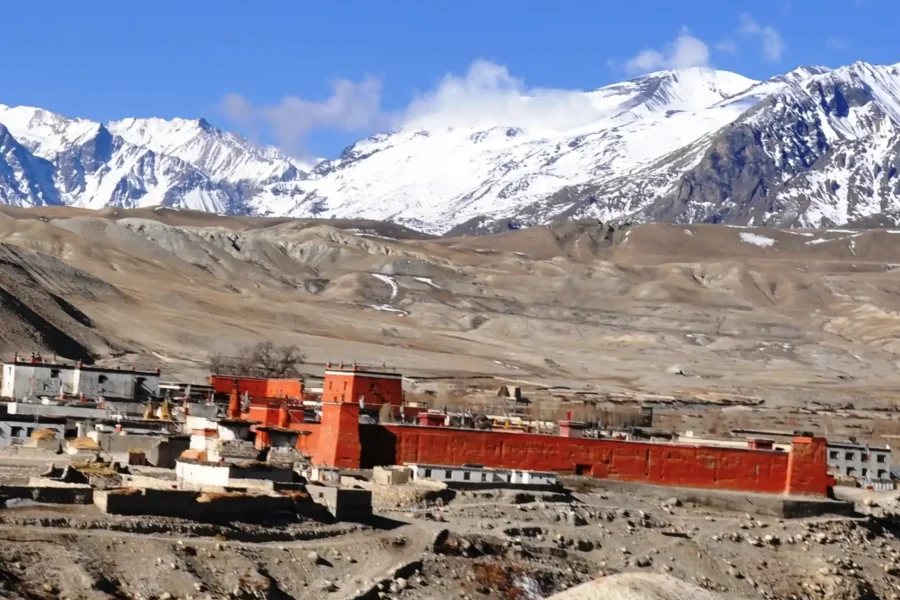
The climax of your adventure is reaching the ancient Lo Manthang walled city, a living museum of Tibetan culture. Here, you will witness centuries-old rituals at Thubchen Gompa and Chodey Gompa, interact with resilient local communities, and explore a landscape that time has beautifully preserved. With Alpine Outdoor Adventure, your safety and cultural respect are our blueprint. You will be guided by government-registered, Wilderness First Responder (WFR) certified leaders who manage all Upper Mustang restricted area permits, teahouse logistics, and 24/7 emergency coordination.
This itinerary is meticulously designed for optimal acclimatization and cultural immersion, ensuring you have the energy to fully appreciate the awe-inspiring geography and profound spiritual heritage of the region. Whether you seek authentic cultural encounters or the ultimate off-the-beaten-path Himalayan adventure, this trek delivers a truly once-in-a-lifetime experience.
Welcome to Nepal. We will be there at Airport arrival waiting to receive you and help make a smooth transfer to a hotel. Evening gear check and trip briefing.
Dedicate this day to preparing for the trek, including obtaining necessary permits for Upper Mustang. Explore Kathmandu’s UNESCO World Heritage Sites like the Pashupatinath Temple, Swayambhunath, and Patan Durbar Square.
Drive from Kathmandu to Pokhara, witnessing the changing landscapes. Pokhara, known for its serene lakes and stunning mountain views, offers a tranquil setting. Spend your evening enjoying the lakeside atmosphere.
Fly to Jomsom, a journey offering aerial views of the Himalayas, and start your trek to Kagbeni, the gateway to Upper Mustang. Kagbeni, situated at an elevation of 2,810 meters, offers a mix of ancient culture and dramatic landscapes.
Trek from Kagbeni to Chele, ascending through beautiful trails offering views of towering cliffs and the Kali Gandaki River. Chele, situated at an altitude of 3,050 meters, introduces the arid landscape of Upper Mustang.
Trek to Ghiling through desert-like landscapes and small villages. Ghiling, at an elevation of 3,570 meters, offers breathtaking views of Nilgiri and Annapurna.
Trek to Tsarang, a historic town with an old palace and monastery, reflecting the rich cultural heritage of Mustang. Situated at 3,560 meters, Tsarang offers unique insights into local life and traditions.
Trek to Lo-Mangthang, the highlight destination of the trip, nestled at an altitude of 3,840 meters. This ancient walled city is a treasure trove of Tibetan Buddhist culture and art.
The Tiji Festival is a sacred three-day event celebrated in the walled city of Lo-Manthang, Upper Mustang, reflecting deep-rooted Tibetan Buddhist traditions. The festival is centered around the story of Dorje Jono, a deity who battles against evil to restore peace and harmony.
Day 1 – The Opening Rituals & First Dance Performance
Morning – Preparation & Procession
The first day sets the foundation for the festival, drawing visitors into the spiritual and cultural richness of Upper Mustang. The energy continues to build on the second and third days, culminating in the final victory over evil.
The second day of the Tiji Festival is even more dramatic, with intensified rituals, mask dances, and symbolic enactments that bring the ancient legend of Dorje Jono to life.
Day 2 – The Battle Against Evil Intensifies
Morning – Sacred Rituals & Offerings
The sense of anticipation grows, as the final day will witness the ultimate victory of good over evil.
The second day of Tiji deepens the spiritual significance of the festival, with vivid performances and sacred rituals preparing for the climactic end on Day 3.
The third and final day of the Tiji Festival is the most dramatic and spiritually significant. It marks the victory of good over evil, as Dorje Jono successfully defeats the demon, restoring peace and prosperity to the land.
Morning – Prayers & Final Preparations
Afternoon – The Defeat of the Demon (Torma Ritual)
Grand Celebration – Music, Dance & Joy
Evening – Farewell & Spiritual Reflection
The Tiji Festival is not just a cultural event; it is a sacred tradition that has been preserved for centuries in Upper Mustang. It reflects the deep-rooted Buddhist philosophy of compassion, strength, and the ultimate triumph of goodness.
Experiencing all three days of the Tiji Festival is truly a once-in-a-lifetime opportunity—an unforgettable journey into Tibetan culture, spirituality, and Himalayan mysticism.
Drive back towards Kagbeni, exploring the mystical landscapes of Ghar Gumba and the red cliffs of Dhakmar along the way. Ghar Gumba, known for its ancient Buddhist manuscripts, and Dhakmar’s striking geology offer a blend of spiritual and natural wonders.
Drive to the sacred site of Muktinath, an important pilgrimage spot for both Hindus and Buddhists. Explore its spiritual ambiance and stunning mountain backdrop. Later, journey to Tatopani, famous for its rejuvenating hot springs, providing a soothing end to the day’s adventures.
Return to the tranquility of Pokhara by road, enjoying the changing landscapes. Take a evening flight to kathmandu.
We will bid you a farewell today and drop you to the internation airport according to your requirements. note: the best time is you book your flight for the evening or night departure.
Upper Mustang is generally a dry, mountainous region located across the Annapurna range, lying in the rain shadow of the Himalayas.
The general weather pattern is arid and windy, with clear skies and very little rainfall. Temperatures vary with altitude and season, but from April to October, daytime temperatures range between 15°C to 22°C, while nights can drop to 5°C or lower, especially in early spring and late autumn.
During the Tiji Festival in May, the weather is typically stable and pleasant—sunny days around 18°C to 20°C, with cool, crisp nights dipping to about 5°C to 8°C. It’s one of the best times to visit the region.
However, the weather in other parts of Nepal during this time can be very different. Areas like Kathmandu and Pokhara start experiencing rising temperatures (25°C to 30°C) and increasing humidity, with the possibility of pre-monsoon showers, particularly in the afternoons.
The terrain is high-altitude desert: barren, rugged, and windswept, with dramatic cliffs, deep canyons, and colorful rock formations. The landscape resembles parts of Tibet, with very little vegetation. Trails are mostly dry and dusty, though some sections can be rocky or steep.
Despite its remoteness, the Upper Mustang trek is not overly technical or extreme—it follows well-established paths and is considered moderate in difficulty.
The highest point on the standard Upper Mustang trek is Lo Manthang, the walled capital of the former kingdom, sitting at around 3,800 meters (12,467 feet). Some side hikes may go slightly higher (up to 4,200 meters)
If you are moderately fit and well-prepared, you'll likely do just fine with proper acclimatization. Nevertheless the altitude is never to be taken lightly and its important to follow your guides expertise and guidance.
If you experience discomfort—whether due to altitude, fatigue, or illness—our guide team is trained to assess and respond promptly. Depending on the severity, options may include rest, descending to a lower altitude, or even arranging emergency evacuation if necessary. Your safety is always our top priority. Based on the situation we can provide you optional side trip to a safer ground.
On average, you can expect to trek between 5 to 8 hours per day. This may vary based on the itinerary, terrain, and your pace. The trek is designed with acclimatization in mind, allowing for gradual altitude gain and rest days when needed. However some days especially descending down are long and sometimes can take up 10-11 hrs.
While this trek is suitable for most healthy individuals with moderate fitness, some prior experience with hiking or cardiovascular endurance is highly recommended. Daily walking over varying terrain requires stamina, leg strength, and mental preparedness. Consistent pre-trek training—walking, jogging, or stair climbing—will significantly enhance your experience.
It’s advisable to consult your doctor regarding preventive medication such as Diamox (Acetazolamide). While not mandatory, it can aid acclimatization for some individuals.
Diamox (acetazolamide) is widely used to help prevent symptoms of altitude sickness during high-altitude trekking. It works by speeding up the body's natural acclimatization process. Health experts, including those in wilderness and mountaineering medicine, recommend its use in certain cases.
When should I consider taking Diamox?
For treatment of mild symptoms: 250 mg twice a day can be used, but rest or descent is still the primary solution.
Are there side effects?
Some people may experience:
These side effects are usually harmless and go away on their own.
Nevertheless we prioritize natural acclimatization and build rest days into the itinerary accordingly.
A personal medical kit is essential. We recommend including:
Any personal prescription medication
Your guide will carry a group first-aid kit for emergencies including emergency oxy cans.
You’ll carry a small daypack (20–30L) with essentials like water, snacks, a jacket, and camera. Your main gear will go into a duffel bag or large backpack (60–80L), carried by our porters. Please limit the porter load to a maximum of 10-12 kg per person.
First we truly believe with our proper guidance you will be able to complete the trip and thats what we call our success. If you choose to end your trek early due to your own personel reason or laziness, on your request our team will arrange your safe return to a lower altitude or back to Kathmandu, depending on your preference and condition. however in this case you will not be eligible for refund or any optional side trip. Any changes in logistics will be managed with your comfort and safety in mind, though additional costs may apply.
You’ll stay in locally operated teahouses, all most all of them have a great views offering twin-shared rooms with basic bedding i.e. mattress, pillow and blanket. Most of the tea houses are wooden/mud structures, some are concrete and some are prefab. Bathroom and toilets are seperate and doesnt comes with amenities at all. There can be option for room with attached toilet/bathroom but note, especially in winter the plumbing system might gets freezed and can get smelly.
Meals typically include Nepali staples such as dal bhat, pasta, noodles, soups, eggs and other items, all served warm and fresh. Boiled drinking water, boiled water is usually available at an extra cost at teahouses, and we recommend using purification tablets or filters. Dinnings have a chimney heating system, which mostly gets on during the evening time.
Hot showers (gas/solar) are available at teahouses for an additional fee, the price ranges from 200 - 700 rs based on the elevation and remoteness. However, due to high altitude and limited facilities, we suggest limiting showers. Laundry services are rare on the trail, so plan to bring enough clothing or quick-dry items for the duration of the trek. You can do self laundry, but please calculate the time required for drying.
Basic electricity (solar/ community hydro/government) is available in most teahouses, for charging devices it will be available often at an extra cost. Wi-Fi is sporadic and unreliable, especially at higher altitudes.
Mobile network coverage exists in lower sections of the trek, but it becomes limited as you gain elevation. In general Nepal has 2 major telecom companies that provide the network services, which are known as “Namaste” or Nepal telecom a govt company and “Ncell” which is a private company. Nepal telecom generals have broader network coverage especially in the rural area.
Tipping is customary in Nepal and greatly appreciated. While it’s discretionary, a general minimum guideline is:
Tips are typically given at the end of the trek in a group ceremony as a gesture of gratitude.
During the Tiji Festival, the normally serene Lo Manthang walled city transforms into a vibrant hub of spiritual energy and cultural pride. You will have the rare opportunity to observe ancient rituals in the Royal Palace courtyard, interact with locals dressed in traditional attire, and witness a living history that has remained untouched by modern development for centuries.
Absolutely. The Cham masked dances are a central, welcoming part of the Tiji Festival, performed in the open courtyard of the monastery for both locals and visitors to observe. Our guides will provide cultural context and ensure you have the best vantage point to appreciate the intricate costumes, traditional music, and the mythological story of Dorje Jono unfolding before you.

Member Since 2025